Ce texte n’est pas un traité. C’est une tentative de diagnostic. Je pars d’un constat simple :
notre époque sait former des compétences, distribuer des droits, produire des trajectoires. Elle sait moins produire des passages.
On change d’école, de ville, de travail, de partenaire, d’identité publique mais on traverse rarement un seuil reconnu, net,
irréversible, qui fasse de l’enfant un adulte, du désir une responsabilité, du chaos une ligne.
Je ne cherche pas la nostalgie. Les “anciens” rites n’étaient ni doux, ni justes, ni universels. Mais ils avaient une vertu brutale :
ils organisaient la métamorphose. Ils donnaient un avant et un après. Ils rendaient la société lisible.
Introduction
La société moderne a conservé. Les droits, les diplômes, les procédures, les impôts etc mais elle a perdu une chose plus difficile à mesurer :
la capacité de faire passer un individu d’un état à un autre,de l’enfance à l’âge d’homme, du désir à la limite. La vie humaine a son parcours et il demande des seuils ;
l'homme moderne a perdu les rituels classiques qui constituent ces seuils. Pour aller vite dans cet introduction, je prétends que les gangs de rue prolifèrent
car ces dernières offrents ces seuils. Nous verrons les différents types de rituels ainsi que ses caractéristiques et ses fonctions. Nous étudierons par la même occasion
l'importance de la liminalité car c'est intrinsèque au passage d'un état à un autre
Durkheim, dans Les Formes élémentaires de la vie religieuse, ne parle pas d’abord de “Dieu”. Il parle d’un mécanisme.
Toute communauté, pour tenir, fabrique une frontière : le sacré et le profane. Ce partage n’a rien de décoratif. Il classe le monde,
distribue des rôles, impose des interdits, et rend la vie collective respirable. Les rites sont l’outil de cette fabrication.
Ils ne commentent pas la cohésion : ils la produisent.
« Art is a means of union among men, joining them together in the same feeling. »
Et plus directement encore : « Music… is what unifies. »
La communauté se tient d’abord par synchronisation des émotions, avant de se tenir par contrat.
Mais la modernité a déplacé ce dispositif. L’art n’est plus seulement au service du rite ; il devient un environnement.
« Life follows symbolism. » Nous vivons dans une mer de signes. La conséquence est brutale : plus les images prolifèrent,
plus elles se dévaluent. Le symbole devient léger. Il circule vite et il transforme rarement.
Or l’être humain n’a pas renoncé au besoin d’initiation. Le manque ne s’évapore pas : il se déplace.
Quand les institutions ne donnent plus de seuils lisibles, d’autres structures les inventent.
Arnold van Gennep (1909) décrit tout changement de statut comme un rite de passage en trois temps : séparation, marge (l’entre-deux),
agrégation (réintégration). La modernité maintient souvent la séparation (ruptures familiales, scolaires, géographiques, symboliques)
et produit une marge prolongée (adolescence étirée, errance sociale, zones grises). Mais elle échoue à organiser l’agrégation :
peu de rituels publics crédibles, peu de reconnaissance nette, peu de nouveaux devoirs assumés. Or la marge sans sortie devient un état.
Dans ce vide, certains groupes (bandes, gangs, sous-cultures coercitives) proposent une agrégation de substitution : règles, épreuves,
réputation, sanctions, “statut” tangible. La violence y fonctionne comme valeur et structure. Le point n’est pas de romantiser ces structures :
c’est d’admettre qu’elles répondent à une fonction que la société ne remplit plus.
C’est dans ce vide que s’éclaire la violence contemporaine. Non comme accident moral, mais comme solution sociale de remplacement.
Les gangs, notamment, recréent une initiation fonctionnelle : territoire, emblèmes, serments, dette. Ils fournissent une cosmologie minimale
et une pédagogie sans nuance : la conséquence.
La culture populaire, elle, joue un rôle ambigu. Le rap unifie, comme toute musique mais il diffuse aussi une esthétique d’hyper-violence qui,
parce qu’elle fascine, devient une symbolique de masse : immédiate et consommable et très souvent dépourvue de profondeur.
Elle propose une initiation de surface dans un monde qui ne sait plus fabriquer l’initiation réelle que nous définirons.
Le cœur de cet essai est là : l’absence d’initiation structurante ne rend pas l’homme plus libre ; elle le rend plus disponible.
Disponible pour des rites de substitution — culturels, médiatiques, ou criminels. Et lorsque la dignité n’est plus transmise,
elle est réclamée autrement. Par le signe. Ou, plus sûrement, par l’épreuve.
This is not a treatise. It is a diagnosis — and, if possible, an attempt at order. Our era can train skills, grant rights,
and produce trajectories. It struggles to produce passages. We change schools, cities, jobs, partners — sometimes even public identities —
yet we rarely cross a recognised, clear, irreversible threshold: from child to adult, from impulse to responsibility, from chaos to form.
This is not nostalgia. Older rites were neither gentle, nor fair, nor universal. But they had one brutal virtue: they organised metamorphosis.
They created a before and an after. They made society legible.
Introduction
Modern society kept rights, diplomas, procedures, taxation — the measurable apparatus. It lost something harder to quantify:
the capacity to move an individual from one state to another — from childhood to adulthood, from desire to limit.
Human life has a course, and it calls for thresholds; modern man has lost the classical rituals that once produced them.
To be blunt in this introduction, I argue that street gangs proliferate because they now offer those thresholds.
We will examine different types of rituals, their characteristics, their functions — and the central role of liminality,
which is intrinsic to any passage from one state to another.
In The Elementary Forms of Religious Life, Durkheim does not begin with “God”. He begins with a mechanism.
Any community, to hold, manufactures a boundary: sacred and profane. This division is not decorative.
It classifies the world, assigns roles, imposes prohibitions, and makes collective life breathable.
Rites are the instrument of that fabrication. They do not comment on cohesion — they produce it.
“Art is a means of union among men, joining them together in the same feeling.”
And more directly: “Music… is what unifies.”
A community holds first through synchronised emotion, before it holds through contract.
Modernity displaced the device. Art is no longer simply at the service of rite; it becomes an environment.
“Life follows symbolism.” We live in a sea of signs. The consequence is brutal: the more images proliferate, the more they devalue.
The symbol becomes light. It travels fast — and transforms rarely.
The human need for initiation has not disappeared; only its official forms have. The lack does not evaporate — it moves.
When institutions no longer provide readable thresholds, other structures invent them.
.jpg)
Arnold van Gennep (1909) describes any change of status as a rite of passage in three movements: separation, margin (the in-between),
and aggregation (reintegration). Modernity often maintains separation (family, school, geographic, symbolic ruptures) and produces a prolonged margin
(stretched adolescence, social drift, grey zones). But it fails to organise aggregation: few credible public rites, little clear recognition,
few new duties assumed. A margin without an exit becomes a state. In this void, certain groups (crews, gangs, coercive subcultures)
offer a substitute aggregation: rules, ordeals, reputation, sanctions — a tangible “status”.
Violence functions there as value and structure. The point is not to romanticise these systems, but to admit that they fulfil a function
society no longer performs.
This is where contemporary violence becomes intelligible — not as a moral accident, but as a social replacement solution.
Gangs, in particular, recreate a functional initiation: territory, emblems, oaths, debt. They provide a minimal cosmology
and a pedagogy without nuance: consequence.
Popular culture plays an ambiguous role. Rap unifies, like all music — but it also circulates an aesthetic of hyper-violence which,
because it fascinates, becomes mass symbolism: immediate, consumable, and often shallow.
It offers a surface initiation — posture, lexicon, imagery — in a world that no longer knows how to manufacture real initiation,
which we will define.
The core of this essay is here: the absence of structuring initiation does not make man freer; it makes him more available.
Available for substitute rites — cultural, media, or criminal. And when dignity is no longer transmitted, it is claimed otherwise:
by the sign — or, more reliably, by the ordeal.
Dieser Text ist keine Abhandlung. Er ist ein Versuch der Diagnose — und, wenn möglich, der Ordnung.
Unsere Zeit kann Kompetenzen formen, Rechte verteilen, Laufbahnen produzieren. Sie kann schwerer Übergänge herstellen.
Wir wechseln Schule, Stadt, Arbeit, Partner — manchmal sogar öffentliche Identität — doch wir überschreiten selten eine anerkannte,
klare, irreversible Schwelle: vom Kind zum Erwachsenen, vom Impuls zur Verantwortung, vom Chaos zur Form.
Das ist keine Nostalgie. Die alten Riten waren weder sanft noch gerecht noch universal. Aber sie hatten eine brutale Tugend:
Sie organisierten Verwandlung. Sie schufen ein Davor und ein Danach. Sie machten Gesellschaft lesbar.
Einleitung
Die moderne Gesellschaft hat Rechte, Diplome, Verfahren, Steuern behalten — den messbaren Apparat. Verloren ging etwas,
das schwerer zu erfassen ist: die Fähigkeit, einen Menschen von einem Zustand in den anderen zu führen — von der Kindheit ins Erwachsenenalter,
vom Begehren zur Grenze. Das menschliche Leben hat einen Verlauf, und es verlangt Schwellen; der moderne Mensch hat die klassischen Rituale verloren,
die diese Schwellen einst hervorbrachten. Um es in dieser Einleitung zugespitzt zu sagen: Ich behaupte, dass Straßen-Gangs auch deshalb wachsen,
weil sie heute solche Schwellen anbieten. Wir untersuchen verschiedene Ritustypen, ihre Merkmale und Funktionen — sowie die Bedeutung der Liminalität,
die jedem Übergang von einem Zustand in den anderen intrinsisch ist.
Durkheim spricht in Die elementaren Formen des religiösen Lebens nicht zuerst von „Gott“. Er spricht von einem Mechanismus.
Jede Gemeinschaft erzeugt, um zu bestehen, eine Grenze: das Heilige und das Profane. Diese Trennung ist nicht dekorativ.
Sie ordnet die Welt, verteilt Rollen, setzt Verbote, und macht das kollektive Leben „atmungsfähig“.
Riten sind das Werkzeug dieser Herstellung. Sie kommentieren Zusammenhalt nicht — sie produzieren ihn.
„Art is a means of union among men, joining them together in the same feeling.“
Und noch direkter: „Music… is what unifies.“
Eine Gemeinschaft hält sich zuerst durch Synchronisierung der Gefühle, bevor sie sich durch Vertrag hält.
Doch die Moderne hat dieses Gerät verschoben. Kunst steht nicht mehr nur im Dienst des Ritus; sie wird zur Umgebung.
„Life follows symbolism.“ Wir leben in einem Meer von Zeichen. Die Konsequenz ist brutal: Je mehr Bilder zirkulieren,
desto weniger Wert haben sie. Das Symbol wird leicht. Es reist schnell — und verwandelt selten.
Der menschliche Bedarf an Initiation ist nicht verschwunden; verschwunden sind seine offiziellen Formen. Der Mangel verflüchtigt sich nicht —
er verlagert sich. Wenn Institutionen keine lesbaren Schwellen mehr geben, erfinden andere Strukturen sie.
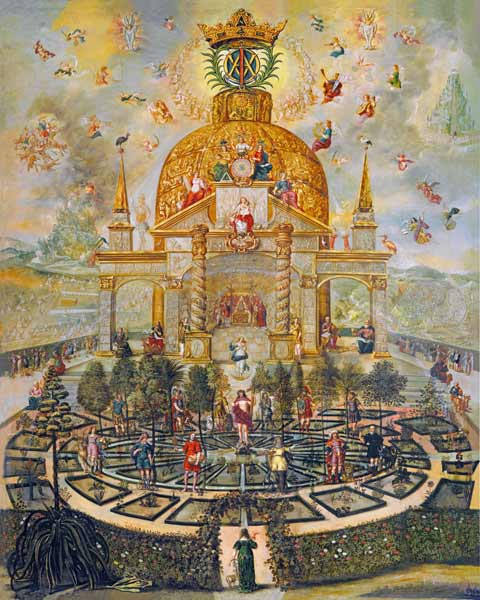
Arnold van Gennep (1909) beschreibt jeden Statuswechsel als Übergangsritus in drei Bewegungen: Trennung, Schwelle (das Dazwischen),
und Angliederung (Wiedereingliederung). Die Moderne hält oft die Trennung aufrecht (familiäre, schulische, geografische, symbolische Brüche)
und produziert eine verlängerte Schwellenphase (gedehnte Adoleszenz, soziales Driften, Grauzonen). Aber sie scheitert an der Angliederung:
wenige glaubwürdige öffentliche Riten, wenig eindeutige Anerkennung, wenige neue Pflichten, die wirklich übernommen werden.
Eine Schwellenphase ohne Ausgang wird zum Zustand. In dieser Leere bieten manche Gruppen (Cliquen, Gangs, coercive Subkulturen)
eine Ersatz-Angliederung: Regeln, Prüfungen, Ruf, Sanktionen — ein greifbarer „Status“.
Gewalt fungiert dort als Wert und Struktur. Es geht nicht darum, diese Systeme zu romantisieren, sondern anzuerkennen,
dass sie eine Funktion erfüllen, die die Gesellschaft nicht mehr erfüllt.
In diesem Vakuum wird zeitgenössische Gewalt verständlich — nicht als moralischer Unfall, sondern als soziale Ersatzlösung.
Gangs rekonstruieren eine funktionale Initiation: Territorium, Embleme, Schwüre, Schuld. Sie liefern eine minimale Kosmologie
und eine Pädagogik ohne Nuancen: Konsequenz.
Popkultur spielt eine ambivalente Rolle. Rap eint, wie jede Musik — aber er verbreitet auch eine Ästhetik der Hyper-Gewalt, die,
weil sie fasziniert, zur Massen-Symbolik wird: unmittelbar, konsumierbar, oft ohne Tiefe.
Sie bietet eine Initiation an der Oberfläche — Pose, Vokabular, Bildwelt — in einer Welt, die reale Initiation nicht mehr herzustellen weiß,
die wir definieren werden.
Der Kern dieses Essays liegt hier: Das Fehlen einer strukturierenden Initiation macht den Menschen nicht freier; es macht ihn verfügbarer.
Verfügbar für Ersatzriten — kulturell, medial oder kriminell. Und wenn Würde nicht mehr vermittelt wird, wird sie anders eingefordert:
durch das Zeichen — oder, verlässlicher, durch die Prüfung.
.jpg)